Cookie Policy: This site uses cookies to improve your experience. You can find out more about our use of cookies in our Privacy Policy. By continuing to browse this site you agree to our use of cookies.

AdipoGen Life Sciences
anti-LAG-3 (human), mAb (17B4) (ATTO 647N)
As low as
490
CHF
CHF 490.00
In stock
Only %1 left
AG-20B-0012TS-T100100 testsCHF 490.00


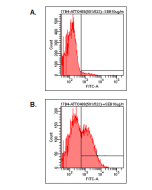
Figure 1: Detection of endogenous human LAG-3 by FACS analysis using anti-LAG-3 (human), mAb (17B4) (ATTO 647) (Prod. No. AG-20B-0012TS).
Human PBMC were stimulated (B) or not (A) with 1μg/ml of superantigen SEB. After 2 days PBMC were stained with 10μg/ml (1μg/0.5x106 cells) of anti-LAG-3 (human), mAb (17B4) (ATTO 647) (Prod. No. AG-20B-0012TS) and analyzed by flow cytometry.
Human PBMC were stimulated (B) or not (A) with 1μg/ml of superantigen SEB. After 2 days PBMC were stained with 10μg/ml (1μg/0.5x106 cells) of anti-LAG-3 (human), mAb (17B4) (ATTO 647) (Prod. No. AG-20B-0012TS) and analyzed by flow cytometry.
Specifications / Handling
| Product Details | |
|---|---|
| Synonyms | Lymphocyte Activation Gene-3; FDC Protein; CD223 |
| Product Type | Monoclonal Antibody |
| Properties | |
| Clone | 17B4 |
| Isotype | Mouse IgG1κ |
| Source/Host | Purified from concentrated hybridoma tissue culture supernatant. |
| Immunogen/Antigen | Synthetic peptide corresponding to 30 aa in the N-terminus of human LAG-3. |
| Label/Conjugates | ATTO 647N |
| Application |
Flow Cytometry: (1:100) |
| Crossreactivity | Human |
| Specificity |
Recognizes human LAG-3. |
| Purity | ≥95% (SDS-PAGE) |
| Purity Detail | Protein G-affinity purified. |
| Concentration | 1mg/ml |
| Formulation | Liquid. In PBS containing 0.02% sodium azide. |
| Isotype Negative Control | |
| Other Product Data |
New ATTO-fluorescent antibodies show increased photostability, outstanding brightness and intense signals. ATTO dyes are thermally stable, resistant to environmental changes and show no significant isomerization. |
| Shipping and Handling | |
| Shipping | BLUE ICE |
| Short Term Storage | +4°C |
| Long Term Storage | +4°C |
| Handling Advice |
Do not freeze. Protect from light. |
| Use/Stability |
Keep conjugated formats at +4°C. Stable for at least 1 year after receipt when stored at +4°C. |
| Documents | |
| Protocols |
 Download PDF Download PDF |
| Safety Data Sheet |
Download PDF |
| Product Specification Sheet | |
| Datasheet |
Download PDF |
Scientific Background Information
Product Description
Lymphocyte activation gene 3 (LAG-3; CD223) plays an important role in negatively regulating T cell proliferation, function and homeostasis. It is required for maximal natural and induced regulatory T cell (Treg) function. LAG-3 is closely related to the T cell co-receptor CD4 and binds to MHC class II molecules but with a significantly higher affinity than CD4.
Product-specific References
- Characterization of the lymphocyte activation gene 3-encoded protein. A new ligand for human leukocyte antigen class II antigens: E. Baixeras, et al.; J. Exp. Med. 176, 327 (1992)
- Cellular expression and tissue distribution of the human LAG-3-encoded protein, an MHC class II ligand: B. Huard, et al.; Immunogenetics 39, 213 (1994)
- Characterization of the major histocompatibility complex class II binding site on LAG-3 protein: B. Huard, et al.; PNAS 94, 5744 (1997)
- CD3/TCR complex-associated lymphocyte activation gene-3 molecules inhibit CD3/TCR signaling: S. Hannier, et al.; J. Immunol. 161, 4058 (1998)
- T Lymphocytes infiltrating various tumour types express the MHC class II ligand lymphocyte activation gene-3 (LAG-3): role of LAG-3/MHC class II interactions in cell-cell contacts: C.E. Demeure, et al.; Eur. J. Cancer 37, 1709 (2001)
- Immunological mechanisms elicited at the tumour site by lymphocyte activation gene-3 (LAG-3) versus IL-12: sharing a common Th1 anti-tumour immune pathway: E.D. Carlo, et al.; J. Pathol. 205, 82 (2005)
- The negative regulatory function of the lymphocyte-activation gene-3 co-receptor (CD223) on human T cells: L. Macon-Lemaitre and F. Triebel; Immunology 115, 170 (2005)
- A soluble lymphocyte activation gene-3 (sLAG-3) protein as a prognostic factor in human breast cancer expressing estrogen or progesterone receptors: F. Triebel, et al.; Cancer Lett. 235, 147 (2006)
- A soluble LAG-3 protein as an immunopotentiator for therapeutic vaccines: Preclinical evaluation of IMP321: S. Fougeray, et al.; Vaccine 24, 5426 (2006) [PMID: 16621192]
- Human dendritic cells acquire a semimature phenotype and lymph node homing potential through interaction with CD4+CD25+ regulatory T cells: J. Bayry, et al.; J. Immunol. 178, 4184 (2007)
- Human lymphocyte activation gene-3 molecules expressed by activated T cells deliver costimulation signal for dendritic cell activation: C. Casati, et al.; J. Immunol. 180, 3782 (2008)
- Peripheral Tr1 and Foxp3+ Treg as Markers of Recurrent Malignancies in Patients with Hepato-Biliary Pancreatic Cancer: T. Ikemoto, et al.; Anticancer Res. 37, 5441 (2017)
- Blockade of LAG3 enhances responses of tumor-infiltrating T cells in mismatch repair-proficient liver metastases of colorectal cancer: G. Zhou, et al.; OncoImmunology 7, e1448332 (2018)
- Targeting LAG-3 and PD-1 to Enhance T Cell Activation by Antigen-Presenting Cells: F.S. Lichtenegger, et al.; Front. Immunol. 9, 385 (2018) [PMC5835137]
- Association Between Expression Level of PD1 by Tumor-Infiltrating CD8+ T Cells and Features of Hepatocellular Carcinoma: HD. Kim, et al.; Gastroenterology 155, 1936 (2018)
- A T-cell–engaging B7-H4/CD3-bispecific Fab-scFv Antibody Targets Human Breast Cancer: A. Iizuka, et al.; Clin. Cancer Res. 25, 2925 (2019)
- Efficient expansion of human granzyme B–expressing B cells with potent regulatory properties: M. Chesneau, et al.; J. Immunol. 205, 2391 (2020)
- Expansion of donor-unrestricted MAIT cells with enhanced cytolytic function suitable for TCR redirection: T. Parrot, et al.; JCI Insight 6, e140074 (2021)
- Single-cell profiling identifies impaired adaptive NK cells expanded after HCMV reactivation in haploidentical HSCT: E. Zaghi, et al.; JCI Insight 6, e146973 (2021) [PMC8262468]
- The multi-specific VH-based Humabody CB213 co-targets PD1 and LAG3 on T cells to promote anti-tumour activity: C.J. Edwards, et al.; Br. J. Cancer 126, 1168 (2022)
- Measurement of LAG-3 Expression Across Multiple Staining Platforms With the 17B4 Antibody Clone: J.B. Wojcik, et al.; Arch. Pathol. Lab. Med. 147, 1307 (2023) [IHC-FFPE]
- The effect of blocking immune checkpoints LAG-3 and PD-1 on human invariant Natural Killer T cell function: A.L. Balasko, et al.; Sci. Rep. 13, 10082 (2023) [PMC10284876]
- The IFNγ-CIITA-MHC II axis modulates melanoma cell susceptibility to NK-cell-mediated cytotoxicity: L.C.M. Krause, et al.; Mol. Oncol. 19, 3096 (2025) [PMC12591318]
- A Peptide Inhibitor of Lymphocyte Activation Gene-3 Interaction with Fibrinogen-like Protein 1 Synergizes with Programmed Death-Ligand 1 Blockade to Restore T Cell Activity and Inhibit Tumor Growth: S.-M. Lee, et al.; Biomat. Res. 30, 0364 (2026) [PMC13172577]
Related Products
-
 LAG-3 (human):Fc (human) (rec.) AG-40B-0031
 -
 anti-LAG-3 (human), mAb (17B4) (ATTO 590) AG-20B-0012TM
 -
 anti-LAG-3 (human), mAb (17B4) (ATTO 488) AG-20B-0012TD
 -
anti-LAG-3 (human), mAb (17B4) (FITC) AG-20B-0012F
-
anti-LAG-3 (human), mAb (17B4) (Biotin) AG-20B-0012B
-
anti-LAG-3, mAb (blocking) (11E3) AG-20B-0011